Dailyscoopster Author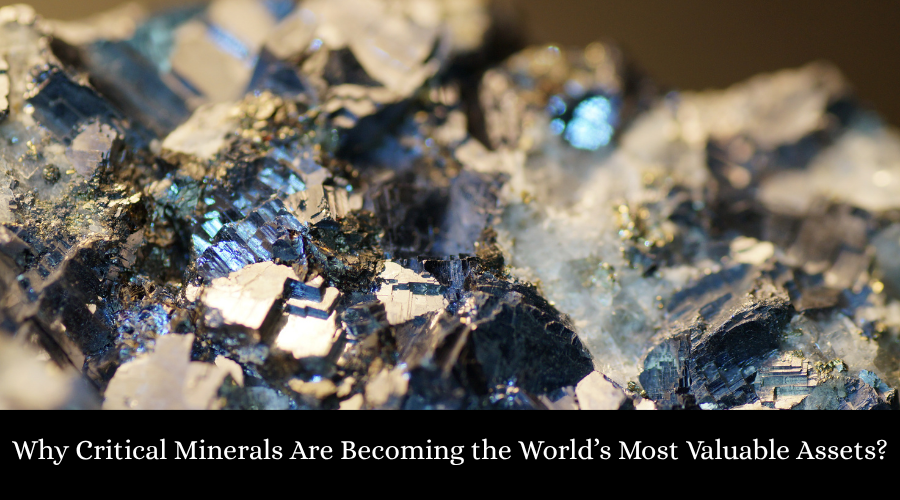
Critical minerals used to sit quietly behind the scenes of industry. Now they’re front-page strategic assets because they power everything modern economies are trying to scale- electric vehicles, renewable energy, data centres, semiconductors, advanced defence systems and resilient electricity grids. When a material becomes essential to both growth and national security, it stops being “just a commodity” and starts behaving like infrastructure.
That shift is exactly why Leading Global Critical Mineral Companies are being watched as closely as big tech. The winners of the next decade won’t only be the brands with the best products they’ll be the organisations that can secure supply, process materials responsibly and deliver at scale even when geopolitics gets messy.
What makes a mineral “critical” (and why the list keeps changing)
A mineral is usually labelled “critical” when two things collide-
- High economic importance– it’s necessary for key industries and essential infrastructure
- High supply risk– production or processing is concentrated, substitutes are limited and disruptions are realistic
Lithium, nickel, cobalt, graphite, rare earth elements, copper, manganese and several speciality metals often appear on critical lists. The list varies by country and keeps evolving because technologies evolve fast and mining doesn’t.
Demand is rising because electrification is mineral-hungry
The global electrification push is not light on materials. Batteries require lithium, nickel, cobalt, manganese and graphite. Permanent magnets used in EV motors and wind turbines rely on rare earths. Grid expansion and modernisation lean heavily on copper. Add AI growth (chips + data centres) and you get structural demand that’s far bigger than “one trend”.
That’s why Leading Critical Mineral Companies in the World are increasingly treated like long-term enablers of industrial transformation, not short-term commodity plays. The faster demand rises, the more valuable reliable producers become.
Supply can’t scale at the speed of policy announcements
Even when investment pours in, supply remains constrained because mines take time often years to explore, permit, finance, build and operate. Processing capacity can be an even bigger choke point than mining itself.
So the story isn’t just “more demand”. It’s demand that grows faster than supply can respond, which is why Leading Global Critical Mineral Companies are being priced like strategic assets- they already have producing operations, development pipelines, processing routes, or long-term customer contracts.
Geopolitics has turned minerals into a security priority
Governments now openly talk about “secure supply chains” for battery materials, rare earths & industrial metals. Export controls, policy incentives & strategic partnerships are all increasing. In practical terms, manufacturers want materials that are not only available but available consistently, compliantly & with traceability.
That’s also why Top Critical Mineral Companies in the World are signing more long-term offtake deals and building partnerships that look less like procurement and more like infrastructure planning.
Leading Global Critical Mineral Companies to watch in 2026
Below are examples of Leading Global Critical Mineral Companies shaping supply in 2026 through production scale, processing capability, or strategic projects.
1) Vedanta (India) – zinc, aluminium & key industrial metals
Vedanta’s portfolio is at the core of industrial supply chains particularly due to its zinc, silver, copper and aluminium assets. In its Q2 FY26 production release, Vedanta said its Aluminium business recorded an all-time-high quarterly aluminium metal production at 617 kt and Zinc India’s mined metal production of 258 kt was the highest ever second quarter. The company is also undergoing a historic demerger, which will create five sector leading companies in the natural resources segment.
Why it matters in 2026- high-volume base metals support electrification (grid, construction, manufacturing) and domestic supply resilience.
2) Rio Tinto – scaling lithium through Rincon
Rio Tinto is also moving in lithium, with things like the Rincon project in Argentina. The company had announced plans to grow this to 60,000 t/y of battery-grade lithium carbonate and has since flagged a US$2.5 billion expansion of the project.
Why it matters by 2026- Lithium supply is the gating factor for batteries & the market will monitor closely capacity expansion.
3) Glencore – cobalt and copper – scale with supply chain relevance
Glencore’s Full Year 2025 Production Report (published January 2026) reported ‘Own Sourced’ copper production of 851,600 tonnes (excluding NAGC) and cobalt production of 36100 tonnes.
Why it matters in 2026- cobalt and copper remain strategically important for batteries and electrification while supply risk remains a constant factor.
4) MP Materials – rare earth supply chain momentum in the US
MP Materials operates the only active rare earth mining and processing operation of scale in the US. It reported delivering more than 45000 metric tons of REO contained in concentrate and producing about 1300 metric tons of NdPr oxide.
- Why it matters in 2026- rare earth magnets are crucial for EV motors wind turbines & defence applications & non-China supply is a strategic priority.
This is why buyers increasingly shortlist Best Critical Minerals Companies in India based on real delivery capability not just resources in the ground.
How to judge critical mineral companies without getting lost?
If you’re trying to make sense of the landscape focus on fundamentals-
- Asset quality and cost curve (grade, complexity, operating costs)
- Jurisdiction and permitting stability
- Processing route and capacity (often the real bottleneck)
- Contract strength (offtake terms, customer mix pricing mechanisms)
- Responsible sourcing and traceability (increasingly required)
These factors separate hype from execution and they’re why Top Critical Mineral Companies in the World command premium attention.
Conclusion- critical minerals are the new strategic wealth
Critical minerals are becoming the world’s most valuable assets because they sit at the intersection of electrification, AI growth, defence readiness & supply-chain sovereignty. Demand is structural, supply is slow to scale & processing remains a chokepoint so reliability wins.
In 2026, organisations will keep tracking Leading Global Critical Mineral Companies not for buzz, but for industrial necessity. And when you look at real-world execution Vedanta’s high-volume metals output, BHP’s record copper, Rio Tinto’s lithium expansion plans, Glencore’s copper/cobalt scale, Albemarle’s lithium market leadership & MP Materials’ rare earth ramp you can see why Leading Critical Mineral Companies in the World are being treated as foundational to the future.